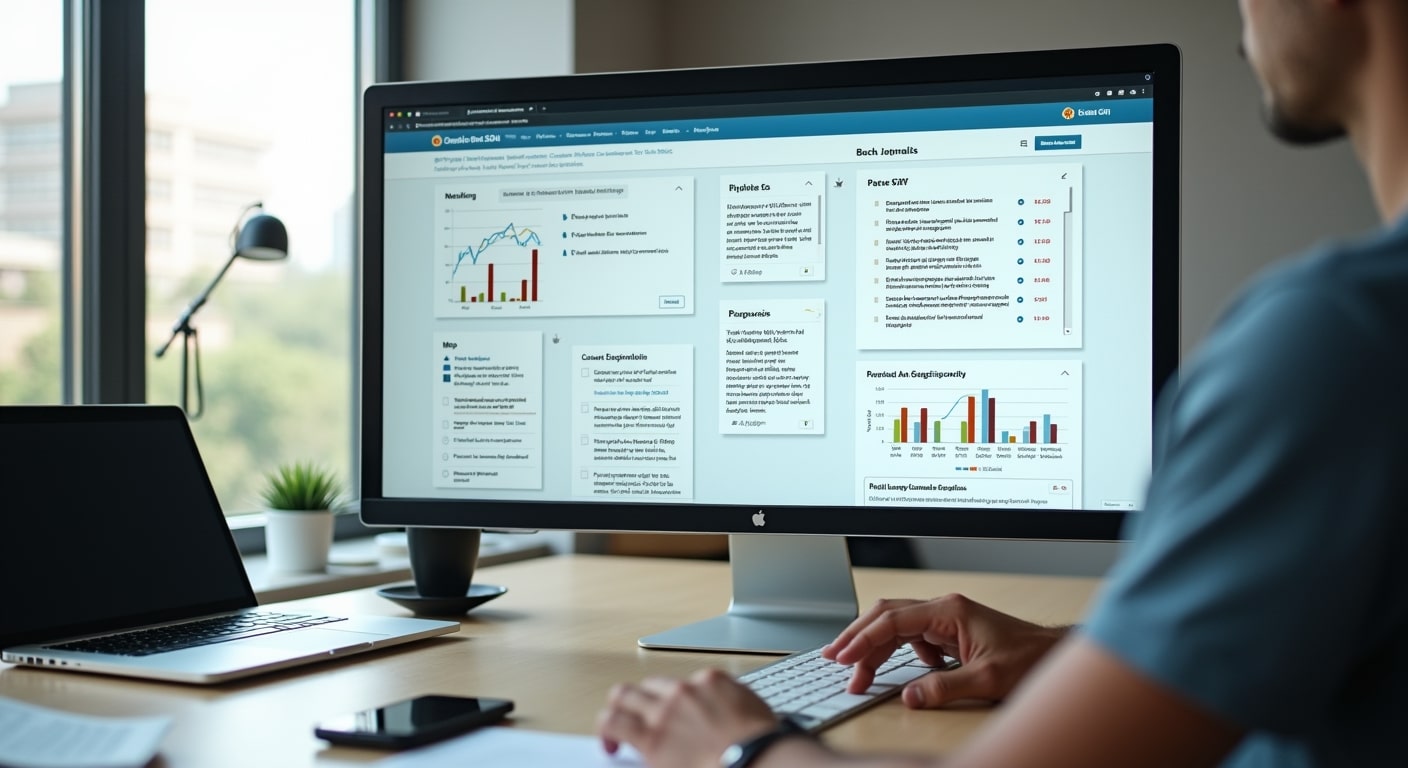
If you want better visibility in Google, a clear SEO checklist Malaysia businesses can follow before publishing is essential. It helps you catch technical issues, improve on-page relevance, strengthen local signals and make sure each page is useful for real readers. A few checks before pressing publish can save weeks of weak performance later.
In simple terms, an SEO checklist is a pre-publication review that confirms your page is technically accessible, properly targeted, well structured and ready to compete in search results. For Malaysian businesses, this means combining standard SEO best practices with local intent, clear service information and trust-building details.
Whether you run a law firm in Kuala Lumpur, a café in Penang, a B2B supplier in Johor or an online store serving all of Malaysia, the same principle applies: do not publish first and fix later. Review your page carefully before it goes live.
If you are new to the broader landscape, start with SEO in Malaysia to understand how search works locally. Then use the checklist below as your practical publishing workflow.
Quick checklist before publishing
- Confirm the page targets one primary search intent
- Use a clear primary keyword naturally in the title, introduction and headings
- Write a unique title tag and meta description
- Set a clean, readable URL slug
- Structure the article with useful headings
- Check internal links to relevant pages
- Optimise images with descriptive file names and alt text
- Make sure the page loads properly on mobile
- Review local relevance for Malaysian audiences
- Proofread for clarity, trust and accuracy
- Submit the URL through Google Search Console if needed
What should Malaysian businesses optimise before publishing?
Before publishing, focus on four areas: keyword targeting, on-page optimisation, technical readiness and trust signals. These are the foundations that help search engines understand your page and help users feel confident enough to stay, read and act.
The goal is not to over-optimise. It is to publish a page that is relevant, easy to crawl, easy to read and genuinely useful.
SEO checklist Malaysia: step-by-step before you publish
1. Start with one clear keyword target
Every page should have a primary topic. If the page tries to rank for too many unrelated terms, it usually becomes vague and weak.
Ask yourself:
- What exact search query is this page targeting?
- Is the intent informational, commercial or transactional?
- Does the content fully answer that need?
For example, a page targeting “office renovation contractor Kuala Lumpur” should not drift into broad advice about interior design trends across Malaysia. Keep the page tightly aligned with the search goal.
If you have not mapped your target terms yet, review Keyword Research Malaysia: How Businesses Find Search Terms first.
2. Match the search intent properly
This step is often missed. A page can use the right keyword and still fail because it does not match what users expect to see.
Common search intents include:
- Informational: users want answers or guidance
- Navigational: users want a specific brand or website
- Commercial: users are comparing providers or solutions
- Transactional: users are ready to enquire, book or buy
For this topic, the correct format is an educational guide with a practical checklist. If your article is too sales-heavy, it will not satisfy informational intent.
3. Write a strong SEO title tag
Your title tag should explain the topic clearly, include the main keyword naturally and encourage clicks without sounding forced.
Good title tag principles:
- Keep it specific
- Front-load important terms when possible
- Avoid repeating the same keyword unnaturally
- Reflect the actual content on the page
Example: “SEO Checklist Malaysia: What to Optimise Before Publishing”
This works because it is direct, relevant and aligned with the page’s promise.
4. Create a useful meta description
A meta description does not directly improve rankings, but it can improve click-through rate if it is relevant and persuasive.
Your meta description should:
- Summarise the page accurately
- Highlight the benefit of reading
- Use natural language
- Stay concise
Think of it as ad copy for your organic result.
5. Use a clean, readable URL slug
Short and descriptive URLs are easier for users and search engines to understand.
Good example:
- /seo-checklist-malaysia/
Avoid long URLs with unnecessary stop words, dates or random parameters unless absolutely required.
6. Optimise the introduction and headings
Your introduction should quickly confirm that the reader is in the right place. It should mention the main topic naturally within the first few lines and set clear expectations.
Then use headings to organise the content logically. Strong heading structure helps with readability, scanning and topical clarity.
Checklist for headings:
- Use one clear page title concept
- Break major points into H2 sections
- Use H3s for detail where needed
- Keep headings descriptive, not vague
Instead of “Things to know”, write “How to optimise images before publishing”.
7. Review content quality for depth and usefulness
Before publishing, read the page as if you were the customer. Does it answer the obvious questions? Is anything missing? Are the examples practical?
Strong content usually includes:
- A clear explanation of the topic
- Logical structure
- Useful examples
- Simple language
- Original insight or local relevance
For Malaysian businesses, local relevance matters. Mentioning situations such as local service areas, multilingual audiences or business types common in Malaysia can make the content more useful.
If you are building a broader strategy rather than publishing one page at a time, see SEO Content Strategy Malaysia: How to Build Topic Clusters.
8. Check keyword use without stuffing
Your primary keyword should appear naturally in the page, but forcing it into every paragraph makes the content weaker.
Instead, use a mix of:
- The primary keyword
- Close variations
- Related terms
- Contextual phrases
For example, a page about an SEO checklist may also naturally include terms like on-page SEO, title tag, internal linking, search intent, meta description and technical SEO.
If a phrase sounds awkward when read aloud, rewrite it.
9. Add internal links with purpose
Internal links help search engines understand your site structure and help readers continue learning. Before publishing, link to relevant pages where it supports the reader journey.
For example:
- Link to a broad guide from a cluster article
- Link to a diagnostics page if discussing issues
- Link to a local SEO page if location relevance matters
For businesses targeting geographic searches, local SEO in Malaysia is a useful next step because many service pages need both on-page and local optimisation.
10. Check external references and trust signals
If you mention tools, standards or best practices, make sure the sources are reputable. For SEO topics, useful reference points often include Google Search Central and Google Search Console documentation.
Also review trust signals on the page:
- Is the business name clear?
- Are contact details easy to find?
- Does the page reflect genuine expertise?
- Are claims realistic and supportable?
Trust matters, especially for service pages and competitive industries.
11. Optimise images properly
Images should support the content, not slow it down or confuse the page.
Before publishing, check that each image has:
- A compressed file size
- A descriptive file name
- Relevant alt text
- Appropriate dimensions for the layout
For example, “seo-checklist-malaysia-content-review.jpg” is better than “IMG_2048.jpg”.
Alt text should describe the image clearly, especially if it adds meaning for users.
12. Test mobile usability
Most Malaysian users browse on mobile devices, so your page must work well on smaller screens. Even strong content can underperform if the mobile experience is poor.
Review these basics:
- Text is easy to read without zooming
- Buttons and links are easy to tap
- Tables do not break the layout
- Images resize properly
- Important information appears early
Mobile usability affects both engagement and crawl understanding.
13. Check page speed and technical readiness
You do not need a perfect technical score before publishing, but obvious issues should be fixed.
Pre-publication technical checks include:
- Page returns a valid 200 status code
- No accidental noindex tag
- Canonical tag is correct
- Page is included in the sitemap if relevant
- Scripts and media are not causing avoidable delays
If this sounds too technical, a proper review using a broader process can help. That is where an SEO Audit Malaysia: What to Check Before Optimising approach becomes useful.
14. Review schema and SERP presentation where relevant
Structured data is not mandatory for every page, but it can help search engines interpret content more clearly.
Depending on the page type, you may consider schema for:
- Articles
- FAQ content
- Local business details
- Products or services
Do not add schema that does not match the visible content. Accuracy matters more than volume.
15. Make local relevance explicit
If your business serves Malaysian customers, your page should reflect that naturally.
This can include:
- Mentioning service areas such as Klang Valley, Johor Bahru or Penang where relevant
- Using local terminology your audience understands
- Referencing common business contexts in Malaysia
- Showing local contact details and business information
For example, a tuition centre page aimed at parents in Petaling Jaya should not read like a generic global article. Small local details improve relevance.
16. Proofread for clarity and credibility
Final proofreading is more than spell-checking. You are checking whether the page sounds competent, helpful and easy to trust.
Review:
- Grammar and spelling
- Consistency in terminology
- Broken links
- Outdated references
- Repetitive wording
A polished page sends stronger quality signals to users and reflects better on the brand.
Pre-publishing SEO checklist at a glance
| Area | What to check | Why it matters |
|---|---|---|
| Keyword targeting | One primary topic and matching intent | Improves relevance and focus |
| Title tag | Clear, unique, naturally optimised | Helps rankings and click-throughs |
| Meta description | Useful summary with reader benefit | Can improve SERP appeal |
| URL | Short, descriptive slug | Cleaner structure and usability |
| Headings | Logical H2 and H3 structure | Improves readability and context |
| Content depth | Answers key user questions | Supports helpfulness and engagement |
| Internal links | Relevant links to supporting pages | Strengthens site architecture |
| Images | Compressed, descriptive, accessible | Supports speed and usability |
| Mobile UX | Readable and functional on phones | Critical for real users |
| Technical checks | Indexing, canonical, status code | Prevents preventable SEO issues |
| Local relevance | Malaysian context and service signals | Supports local visibility |
| Proofreading | Accuracy, clarity and trust | Improves user confidence |
What mistakes should you avoid before publishing?
Many weak pages do not fail because of one major issue. They fail because of many small issues combined.
Common pre-publication mistakes include:
- Targeting multiple unrelated keywords on one page
- Writing titles that are vague or duplicated
- Ignoring mobile formatting
- Publishing thin content that says little
- Forgetting internal links
- Uploading large images that slow the page
- Using generic content with no Malaysian context
- Accidentally blocking indexing
If you want a deeper breakdown of errors that regularly hold sites back, the guide on SEO mistakes Malaysia is a useful follow-up read.
How do you know a page is ready to publish?
A page is ready when it is useful, technically accessible and clearly aligned with the target search query. You do not need perfection. You need confidence that the basics are covered well.
A practical final review is:
- Read the page from top to bottom once for usefulness
- Check the title tag, meta description and URL
- Review headings, keyword use and internal links
- Test the page on mobile
- Confirm indexing settings and canonical signals
- Proofread one last time before publishing
After publishing, monitor impressions, clicks and indexing in Google Search Console. Technical readiness before launch is important, but performance data after launch tells you what to improve next.
Key takeaways
- A strong pre-publication process improves SEO results and reduces avoidable mistakes
- Each page should target one clear keyword theme and search intent
- Titles, headings, internal links and mobile usability matter before the page goes live
- Malaysian businesses should add local relevance where it naturally fits
- Technical checks such as indexing, canonicals and page speed should never be skipped
- Helpful, trustworthy content performs better than forced optimisation
Frequently asked questions
What is the most important item in an SEO checklist before publishing?
The most important item is matching the page to one clear search intent. If the page does not satisfy what users are actually looking for, technical optimisation alone will not make it perform well.
How often should I use the primary keyword on a page?
Use it naturally where it helps clarify the topic, such as the introduction, title, headings and relevant body content. There is no ideal fixed number. Clarity matters more than repetition.
Do small businesses in Malaysia need a different SEO checklist?
The core checklist is the same, but small businesses often need to pay extra attention to local relevance, service area signals, Google Business Profile alignment and concise pages that answer local customer questions clearly.
Should I publish quickly and optimise later?
It is better to complete the essentials before publishing. You can always improve a page later, but publishing weak content too early can delay performance and create unnecessary clean-up work.
What tool should I check after publishing?
Google Search Console is one of the most useful tools to check indexing, impressions, clicks and page issues. It helps confirm whether Google is discovering and understanding your content properly.
Conclusion
A reliable SEO checklist Malaysia businesses can follow before publishing is not just a quality control exercise. It is part of a smarter SEO workflow. By checking keyword focus, content quality, internal links, mobile usability, technical settings and local relevance before launch, you give every page a stronger foundation from day one.
If you want to build on this checklist, the next useful step is to read SEO timeline in Malaysia so you know what to expect after publishing and how long SEO improvements usually take to show results.